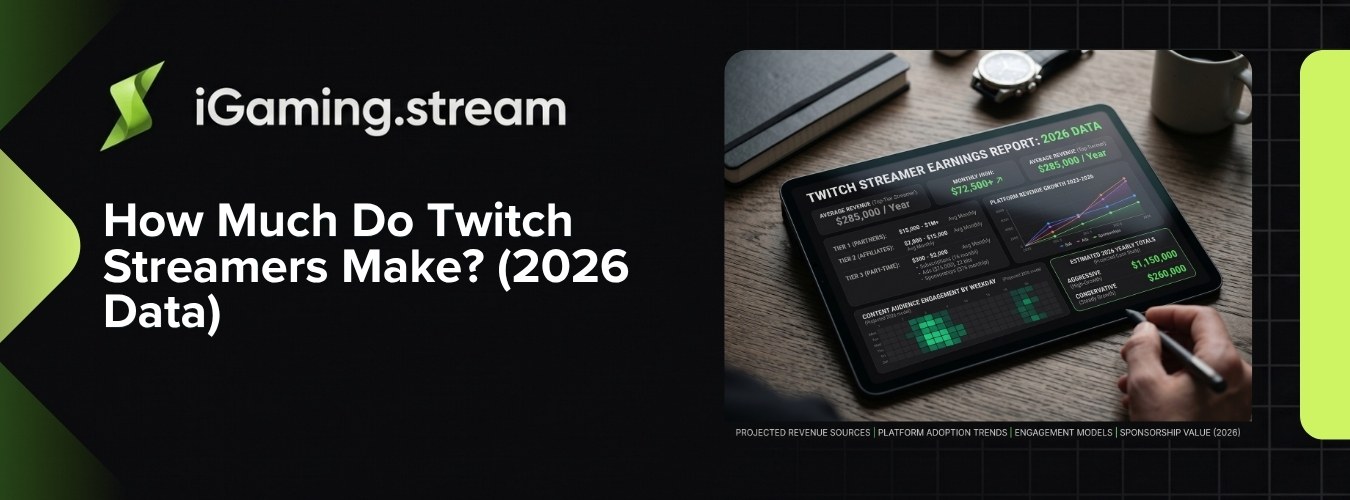
How Much Do Twitch Streamers Make? (2026 Data)
The question of how much Twitch streamers earn has no single answer. A hobby streamer with 10 viewers makes nothing. A top gambling streamer with an operator sponsorship can earn over $100,000 per month. This guide breaks down the real numbers at every level, with a special focus on how casino and gambling streamers earn significantly more than their gaming counterparts.
Average Twitch Streamer Income by Tier
Twitch streamer salaries vary by orders of magnitude depending on audience size, content category, and monetization strategy. The following tiers represent realistic ranges based on publicly available data, leaked Twitch payouts from 2021 (adjusted for 2026 sub/ad rates), and industry estimates from affiliate managers who negotiate streamer deals daily.
Hobby Streamers
$0 - $200Avg viewers: 0-50 avg
Primary sources: Small donations, occasional subs
The vast majority of Twitch streamers fall here. Most stream as a hobby alongside a full-time job.
Small Streamers
$200 - $2,000Avg viewers: 50-300 avg
Primary sources: Subs, donations, small sponsorships
Enough to cover streaming costs (hardware, internet) but rarely a livable wage. Some supplement with affiliate links.
Mid-Tier Streamers
$2,000 - $15,000Avg viewers: 300-2,000 avg
Primary sources: Subs, ads, sponsorships, affiliate deals
Full-time streaming becomes viable here. Brand sponsorships start to appear, typically $500-$3,000 per campaign.
Large Streamers
$15,000 - $50,000Avg viewers: 2,000-10,000 avg
Primary sources: Major sponsorships, high sub counts, merchandise
These streamers typically have agents or managers. Sponsorships become the dominant income source over subscriptions.
Top-Tier / Elite
$50,000 - $500,000+Avg viewers: 10,000+ avg
Primary sources: Platform exclusivity deals, major brand partnerships, equity stakes
The top 0.1% of all streamers. Many negotiate seven-figure annual contracts with platforms or gambling operators.
It is important to note that these numbers represent gross income before expenses. Full-time streamers typically spend $500-$2,000 per month on internet, equipment maintenance, game purchases, overlays, and moderation. Taxes can take 25-40% depending on jurisdiction. The actual take-home for a mid-tier streamer earning $8,000 per month might be closer to $4,500 after expenses and taxes.
Why Casino and Gambling Streamers Earn More
Gambling streamers at every tier earn significantly more than their general gaming counterparts. A casino streamer with 3,000 average viewers typically out-earns a gaming streamer with 10,000 viewers. The reason is simple economics: the value of a gambling viewer to an operator is dramatically higher than the value of a gaming viewer to a game publisher.
Online casinos pay $200-$500 per first-time depositor through affiliate programs. A mid-tier gambling streamer who drives 50-100 FTDs per month generates $10,000-$50,000 in affiliate commissions alone, on top of their regular streaming income. Some operators offer revenue share deals where streamers earn a percentage of the net gaming revenue generated by referred players for the lifetime of those accounts. For top streamers with loyal audiences, this can generate six figures monthly from a single operator relationship.
Additionally, gambling operators pay premium sponsorship rates because they know the audience is pre-qualified. Every viewer watching a casino stream is demonstrably interested in gambling. Compare this to a gaming stream where only a fraction of viewers might be interested in any specific game or product. This audience quality premium means casino streamer sponsorships command 3-10x higher rates per viewer than typical gaming sponsorships.
The Kick platform has amplified this dynamic. When Kick launched with a gambling-friendly policy, it attracted many of the biggest casino streamers who were restricted on Twitch. These streamers often received platform exclusivity deals worth millions, on top of their operator sponsorships. The resulting competition for top gambling streamers has driven rates even higher.
Revenue Sources Breakdown
Streamer income comes from multiple sources. Understanding each one is essential for both streamers trying to maximize revenue and affiliate managers evaluating what a fair partnership rate looks like.
Subscriptions
15-40%Twitch pays streamers 50-70% of the $4.99-$24.99 monthly sub fee. Top partners get the higher split. For non-gambling streamers, this is often the biggest revenue source. For gambling streamers, sponsorships dominate.
Donations & Bits
5-15%Direct viewer support through PayPal, bits, or third-party platforms like Streamlabs. Highly variable and dependent on community culture. Gambling streams tend to see larger individual donations but fewer total donators.
Ads
5-15%Pre-roll and mid-roll ads generate revenue based on impressions. Twitch ad rates vary from $2-$10 CPM depending on viewer geography. Smaller revenue share on Kick. Most streamers find ads annoying but necessary.
Sponsorships
30-70%Brand deals, operator sponsorships, and campaign fees. For gambling streamers, this is typically the dominant income source. Rates range from $500/month for micro-streamers to $100,000+/month for top casino streamers.
Affiliate Revenue
10-40%Commissions from affiliate links and promotional codes. Casino operators pay $200-$500 per FTD or 25-45% revenue share. This is the highest-value revenue stream per viewer for gambling streamers.
Platform Deals
VariableKick and Twitch both sign exclusivity deals with top streamers. These can range from $50K/year for mid-tier streamers to multi-million dollar deals for the biggest names. Gambling streamers command premium platform deals.
Kick vs Twitch: Where Gambling Streamers Earn More
The platform choice between Kick and Twitch has real financial implications for gambling streamers. Each platform offers different monetization structures, content policies, and audience demographics.
| Factor | Twitch | Kick |
|---|---|---|
| Sub Revenue Split | 50-70% to streamer | 95% to streamer |
| Gambling Policy | Restricted (licensed sites only) | Permissive (primary category) |
| Audience Size | Larger overall, but gambling is niche | Smaller overall, but gambling is core |
| Exclusivity Deals | Selective, established streamers | Aggressive recruitment, premium rates |
| Best For | Established streamers, mixed content | Dedicated gambling streamers |
For dedicated gambling streamers, Kick generally offers better economics. The 95% sub split (versus 50-70% on Twitch), combined with a more gambling-friendly environment and aggressive creator recruitment, means most casino streamers earn more per viewer on Kick. However, Twitch's larger overall audience means a streamer who also produces non-gambling content might find better total earnings on Twitch through diversified revenue streams.
Many top streamers maintain presence on both platforms, sometimes streaming gambling content on Kick and gaming content on Twitch. This cross-platform approach maximizes total reach but requires more effort and makes it harder for affiliate managers to track total performance. Tools like iGaming.stream that track streamers across both Kick and Twitch help solve this fragmentation problem.
What Top Gambling Streamers Reportedly Earn
While exact figures are rarely disclosed, a combination of leaked contracts, public statements, and industry estimates gives us a reasonable picture of what the biggest gambling streamers earn.
The highest-earning gambling streamers operate on multi-year contracts with operators that include monthly retainers, performance bonuses, and revenue share components. Public reporting and industry sources suggest the top five to ten gambling streamers globally earn between $1 million and $10 million annually from operator partnerships alone, not counting platform deals, subscriptions, or other revenue.
At the mid-tier level (1,000-5,000 average viewers for gambling content), monthly earnings typically range from $5,000 to $30,000 from all sources combined. The wide range reflects differences in negotiation skill, audience geography, conversion rates, and whether the streamer has secured an operator sponsorship or relies solely on affiliate commissions.
For streamers just entering the gambling niche with 200-1,000 average viewers, affiliate commissions alone can generate $500-$3,000 per month if they maintain consistent streaming schedules and effectively promote their referral links. Adding small sponsorships and subscription revenue can bring total income to $1,000-$5,000 monthly at this level.
How Affiliate Managers Value Streamers
Understanding how affiliate managers evaluate streamers helps both sides negotiate better deals. The modern approach to streamer valuation has moved beyond simple follower counts to multi-dimensional scoring.
The primary metric is viewer-hours: average concurrent viewers multiplied by hours streamed per month. A streamer averaging 2,000 viewers for 120 hours monthly generates 240,000 viewer-hours. Applying a revenue-per-viewer-hour (RPV) rate — which varies by market and operator — gives you an estimated monthly partnership value. This metric helps managers benchmark streamers against each other and negotiate fair deal terms.
Beyond raw viewer-hours, managers assess engagement quality (are viewers actively chatting or is the chat dead?), audience geography (DACH and UK viewers are worth more than viewers from unregulated markets), gambling content percentage (a streamer who plays casino games 80% of the time is more valuable than one who does so 20% of the time), and historical conversion data if available.
Platforms like iGaming.stream formalize this process by providing engagement signals, gambling hour tracking, audience market analysis, and revenue estimates across all tracked streamers. This standardization helps both managers and streamers arrive at fair valuations based on data rather than guesswork.
How to Maximize Earnings as a Streamer
Whether you are just starting or looking to grow your streaming income, these strategies consistently separate high-earning streamers from those who plateau.
Stream consistently and on schedule
Operators and affiliate managers want reliable partners. Streamers who maintain consistent schedules (minimum 4-5 days per week, same time slots) build larger, more engaged audiences and are far more attractive to sponsors.
Build presence on multiple platforms
A Kick + Twitch + YouTube presence multiplies your total reach and makes you more valuable to operators who want cross-platform coverage. Even a small YouTube channel with stream highlights can attract viewers who discover you through search.
Track and present your own data
Streamers who can show an affiliate manager their viewer-hour trends, engagement metrics, and audience demographics command higher rates. Self-awareness about your performance signals professionalism and makes negotiations more productive.
Verify your profile
OAuth-verified profiles on platforms like iGaming.stream signal legitimacy. In an industry rife with fake accounts and inflated metrics, verification is a competitive advantage that unlocks better partnership opportunities.
Negotiate beyond flat fees
Combine a smaller monthly retainer with performance bonuses (per FTD or revenue share). This aligns your incentives with the operator and often results in higher total earnings than a flat fee alone, especially if your audience converts well.
FAQ
How much does the average Twitch streamer make per month?
Do Kick streamers make more than Twitch streamers?
How much do casino streamers make from affiliate links?
Can you make a living streaming on Twitch?
How do gambling streamers get sponsorships?
Run an iGaming Affiliate Team?
iGaming.stream gives affiliate managers the tools to discover, qualify, and monitor gambling streamers on Kick and Twitch — with real audience data and verified affiliate-link tracking.